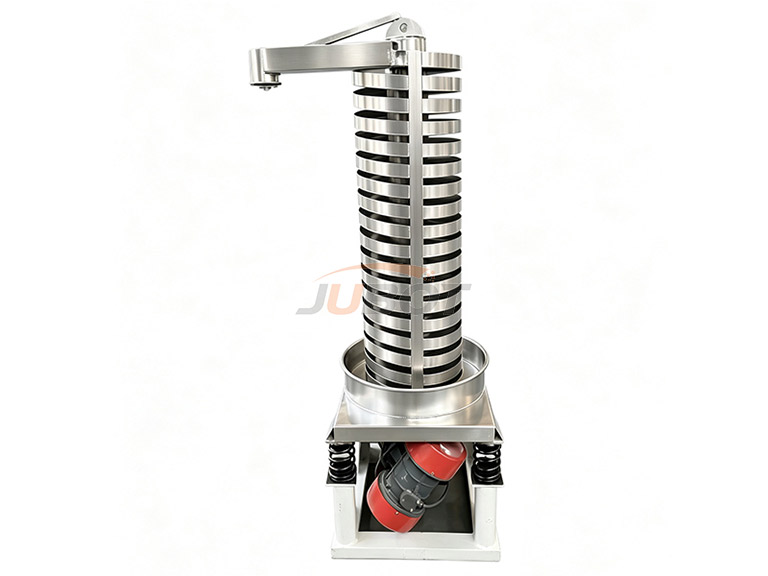
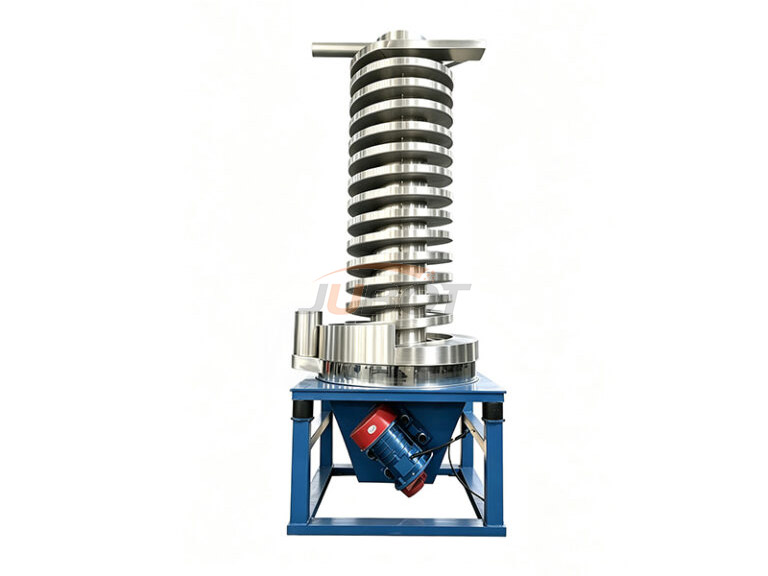
Product Overview
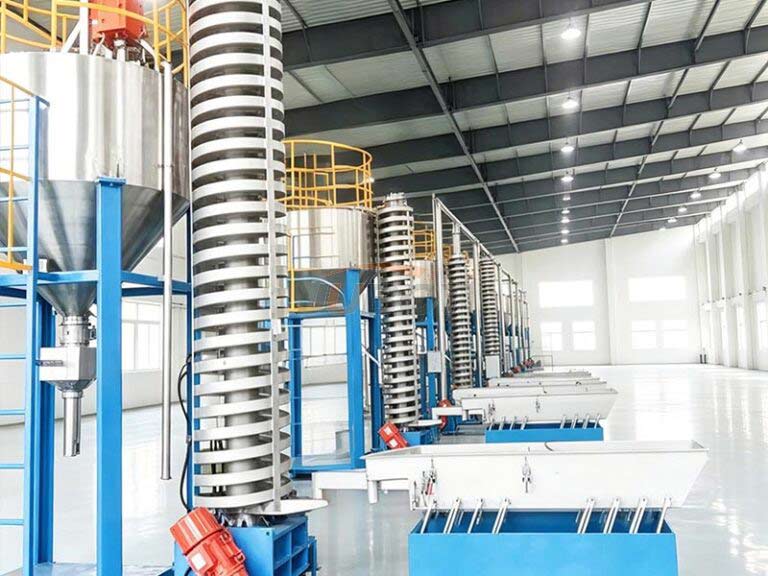
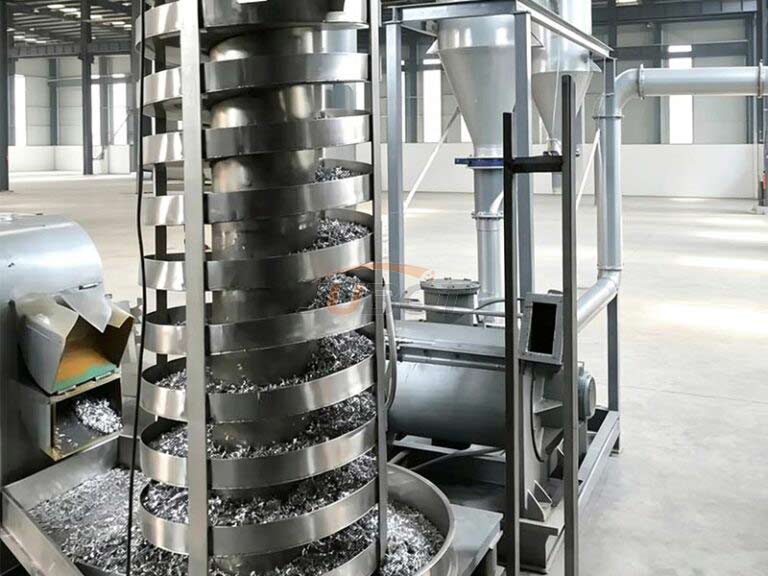
The vibratory vertical elevator is a conveying machine that uses vibration to achieve continuous vertical lifting of materials. The vibration motor generates an excitation force, causing the materials to move upward along the conveying trough. It features a simple structure, stable operation, smooth conveying, small footprint, and low material damage. It is suitable for conveying bulk materials such as rice, grains, nuts, sugar, salt, and plastic granules. It can be connected with silos, screening machines, mixers, packaging machines, and other equipment to achieve automated continuous conveying between different heights.
Working Principle
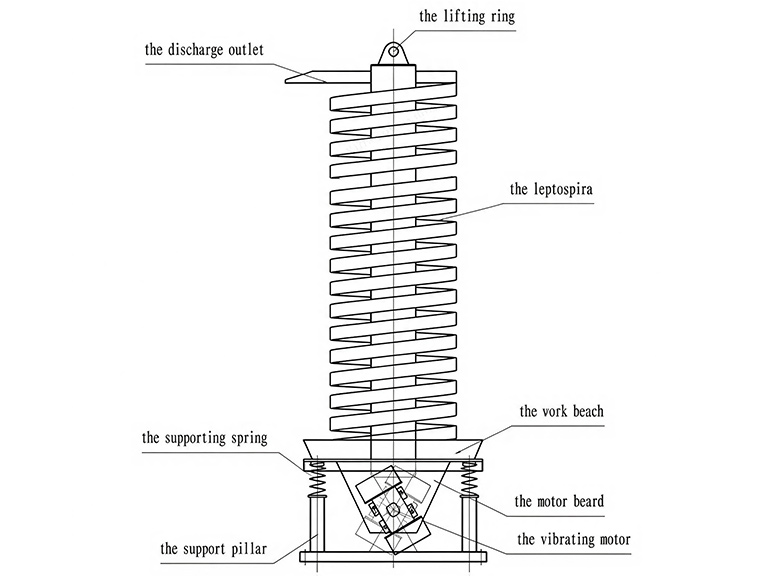
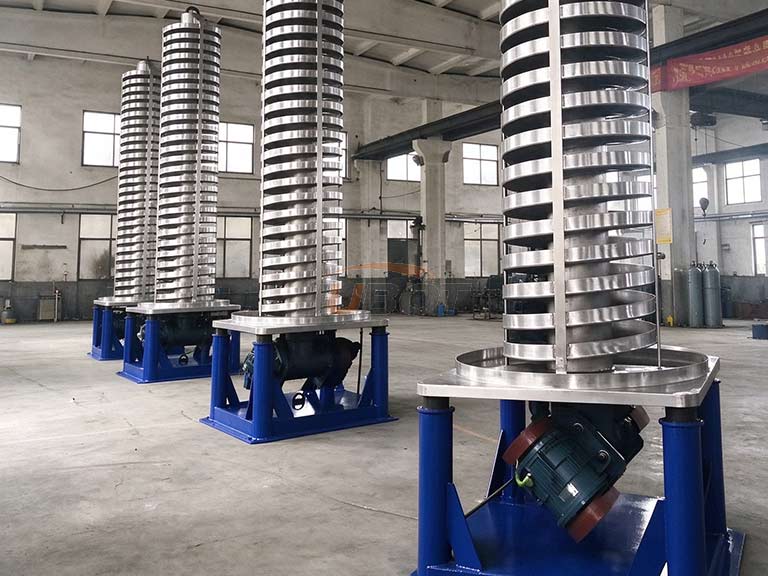
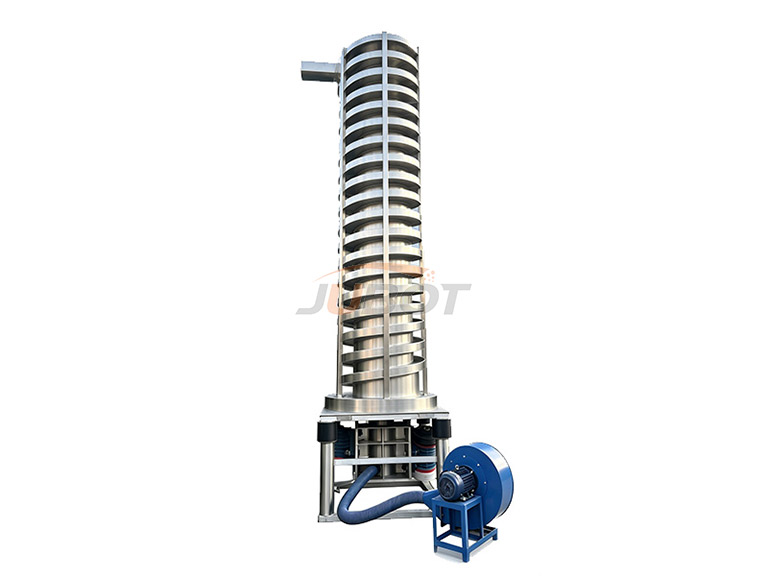
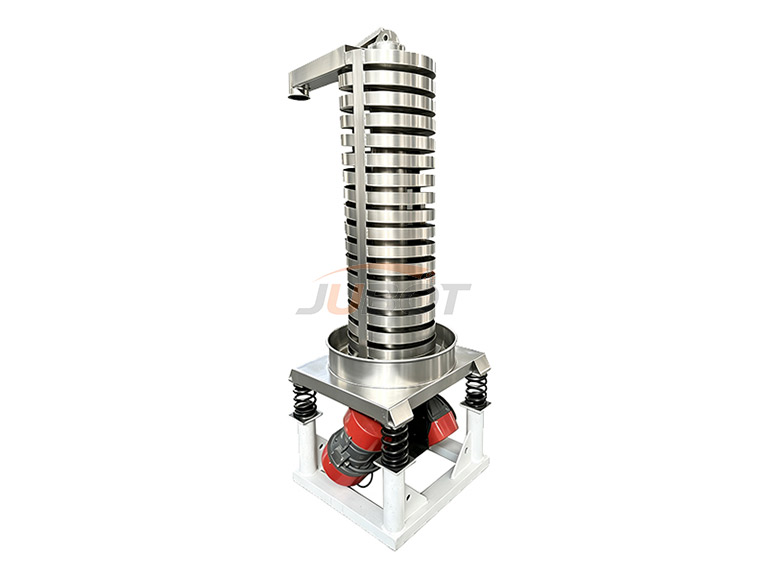
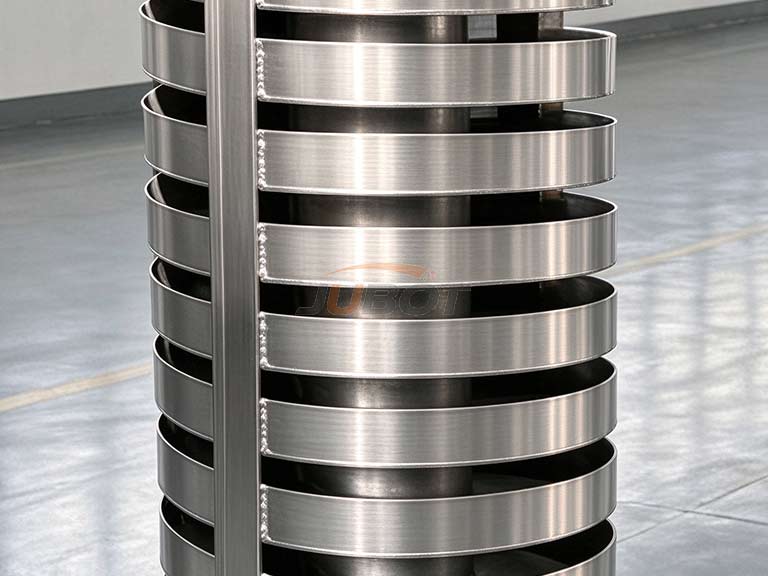
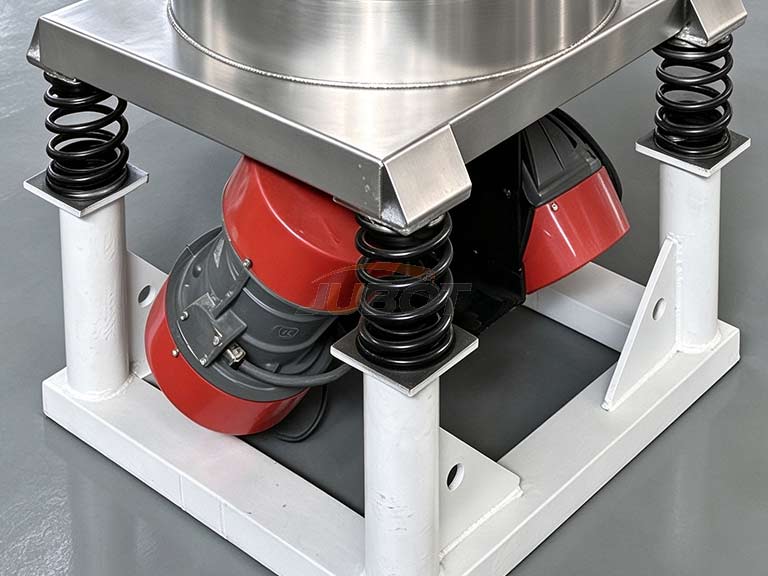
The vibratory vertical elevator mainly consists of a vibration motor, base, spring damping system, spiral conveying trough, and discharge outlet. After the machine starts, the vibration motor at the bottom generates periodic excitation force, causing the entire spiral elevator to produce small vibrations in vertical and rotational directions. After the material enters through the bottom feeding inlet, it moves upward along the spiral conveying trough under the combined action of vibration and gravity. As the spiral trough continuously vibrates, the material gradually moves upward along the spiral track and is discharged through the outlet at the top, achieving vertical conveying.
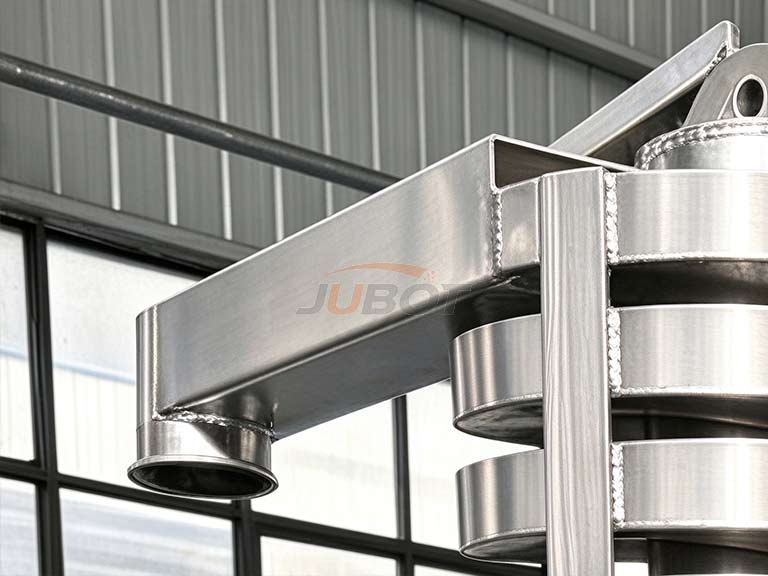
Features and Advantages
The vertical design makes full use of the height of the workshop and requires less floor space than horizontal conveying equipment, making it suitable for production environments with limited space.
Materials move slowly along the spiral track with minimal impact, making the machine suitable for products such as rice, food granules, and seeds that require a low breakage rate.
The machine has a relatively simple structure and mainly operates through a vibration motor, without complicated transmission chains or bucket systems, resulting in lower maintenance requirements.
The lifting height can be customized according to production requirements. Different lifting heights can be achieved by adding or reducing the length of the spiral conveying trough.
Specification
| Model | XZCS-1250 | XZCS-2000 | XZCS-3500 | XZCS-4500 | XZCS-6000 |
| Conveying capacity(t/h) | 0.3 | 0.6 | 3 | 4 | 2 |
| Convey | 1250 | 2000 | 3500 | 4500 | 6000 |
| height(mm) | |||||
| Spiral groove diameter(mm) | 220 | 321 | 631 | 631 | 503 |
| Operating frequency (times/min) | 1500 | 1500 | 1000 | 1000 | 1000 |
| Power | 2*0.1 | 2*0.2 | 2*0.75 | 2*1.5 | 2*1.5 |
| (kw) | |||||
| Supply | 380 | 380 | 380 | 380 | 380 |
| voltage(V) | |||||
| Rated current | 2*0.4 | 2*0.8 | 2*2.2 | 2*4.1 | 2*4.1 |
| (A) | |||||
| Resultant amplitude(mm) | -4 | -4 | -4 | -4 | -4 |
Applications
The vertical elevator is mainly used in production and conveying processes where materials need to be continuously lifted from a lower level to a higher level. It is suitable for industries such as grain, food, feed, chemical, and mining, especially for applications requiring low material breakage, high hygiene standards, and stable conveying performance.