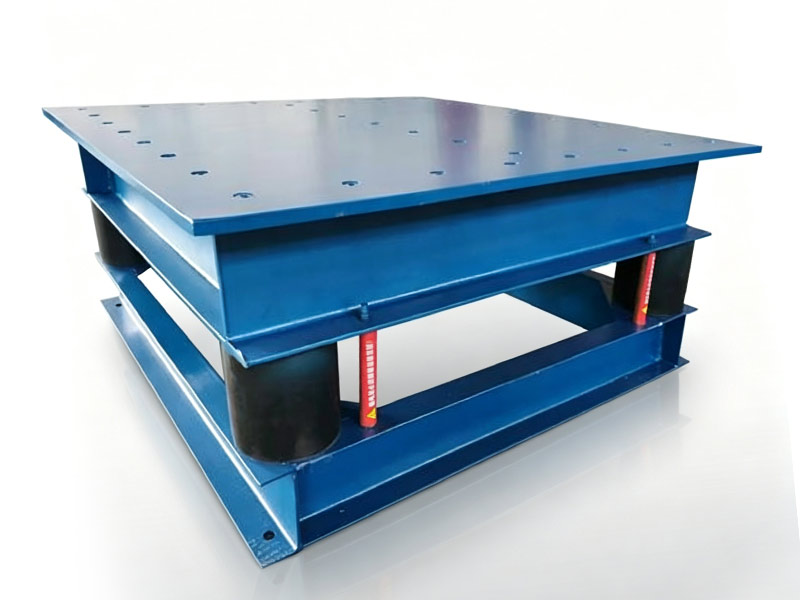
Product Overview
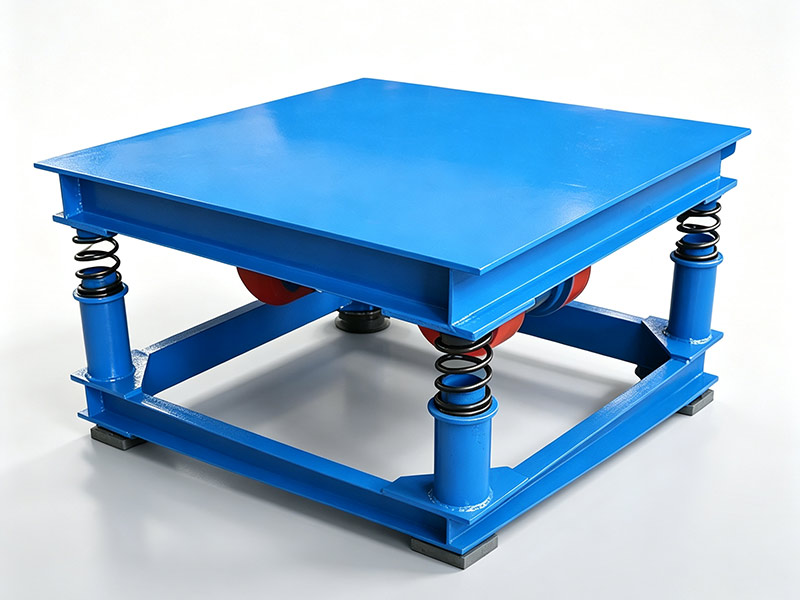
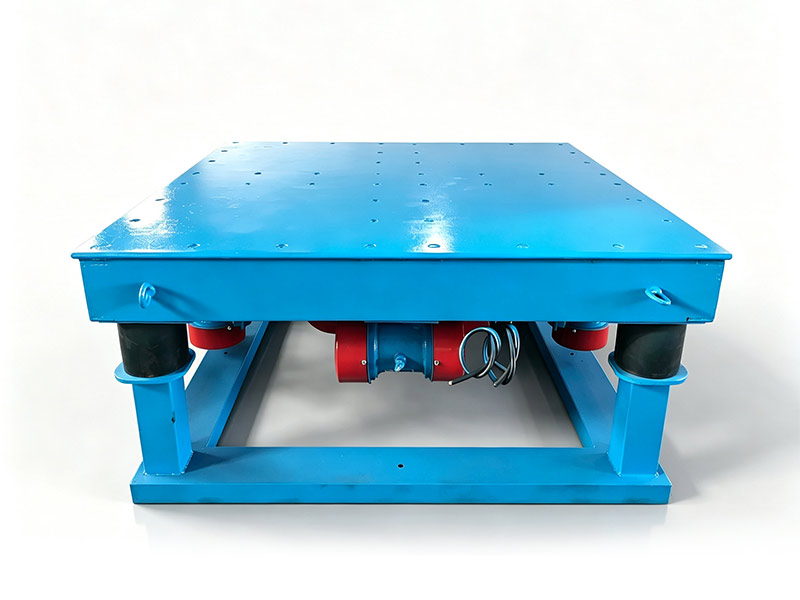
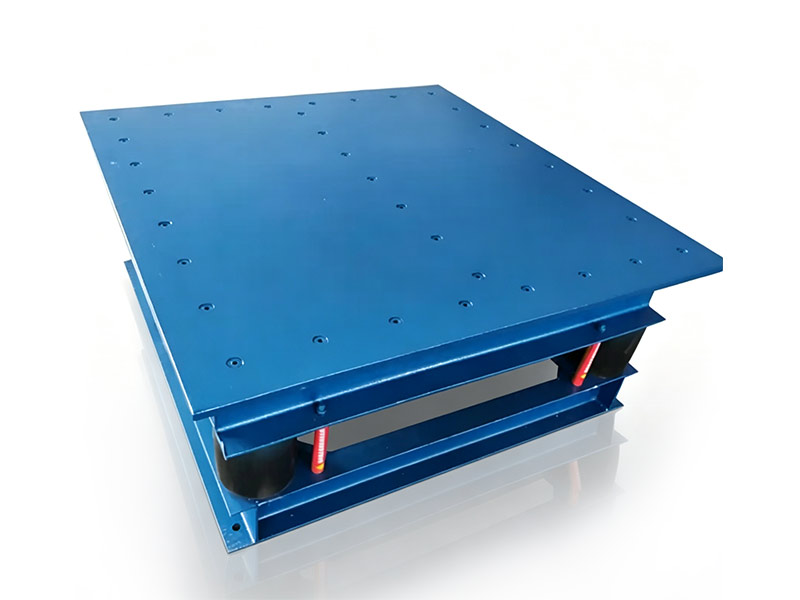
The vibrating table, also known as a compaction table, is an industrial device that uses three-dimensional vibration to expel internal air and voids from powdery or granular materials, thereby increasing material density. It is mainly composed of a base, tabletop, vibration motors, and shock-absorbing springs, and can be integrated with production lines.
Working Principle
The vibration motors serve as the excitation source, generating vibration forces that drive the tabletop to vibrate in three dimensions–horizontally, longitudinally, and vertically. Under the effect of vibration, the material continuously tumbles and settles, with internal air and gaps being expelled and particles rearranging to achieve compaction, molding, or shaping effects. The excitation force is adjustable to accommodate different material requirements.
Advantages
- Excellent compaction effect. Three-dimensional vibration applies simultaneous forces in multiple directions, resulting in higher material density.
- Adjustable excitation force. Can be quickly tuned to the optimal vibration intensity for different materials and molds.
- Lightweight, compact, easy to install, and convenient to maintain.
- Vibration motors feature low energy consumption and low noise, suitable for long-term continuous operation.
Application
Widely used in food, chemical, metallurgy, foundry, molding, building materials, concrete products, and other industries. Typical applications include sand compaction in lost-foam casting molding boxes, precast component forming, concrete vibration, and densification treatment of granular materials prior to packaging.
Specification Table
| Vibrating Table | ||||
| Model | Area(㎡) | Power(KW) | Amplitude (mm) | Weight(Kg) |
| ZDP-500*500 | 0.25 | 2*0.25 | 2—5 | 300 |
| ZDP-1000*1000 | 1 | 2*0.4 | 2—5 | 600 |
| ZDP-1200*1200 | 1.44 | 2*3 | 2—5 | 1600 |
| ZDP-1500*1500 | 2.25 | 2*3 | 2—5 | 2600 |
| ZDP-2000*2000 | 4 | 4*3 | 2—5 | 3000 |
| ZDP-3000*3000 | 9 | 6*1.5 | 2—5 | 3200 |